
Illegal Road Taxes
A hidden barrier to Somali's Internal trade and commerce
Cortese from NBC
Rural economic development depends on free, efficient, and affordable movement of people, goods, and services. Roads and transportation networks connect rural producers and entrepreneurs to urban markets, enabling them to sell their products at competitive prices while providing consumers with a reliable supply of locally produced food and other essential goods.
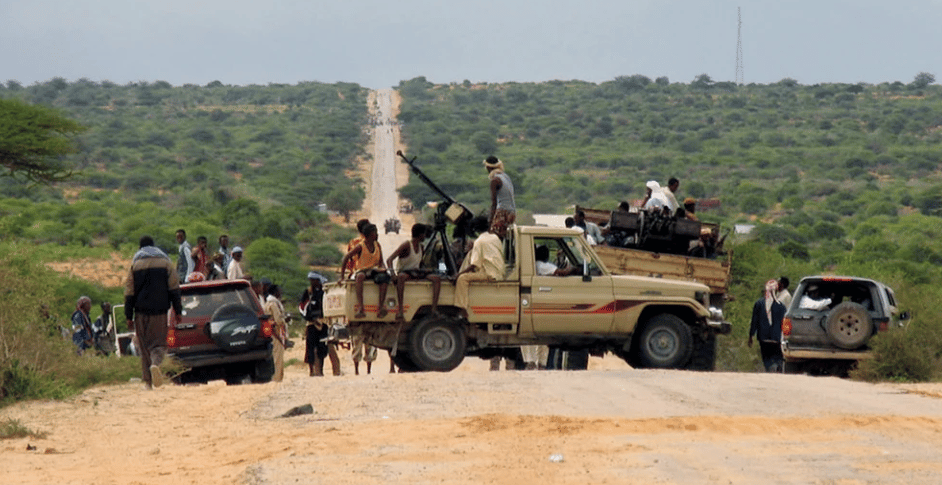
Across Somalia's Federal Member States, with the exception of Puntland, there are numerous unauthorized road checkpoints where illegal taxes and fees are collected. These unauthorized charges are imposed by various actors, including state and local authorities, clan militias, and Al-Shabaab. The proliferation of such checkpoints increases transportation costs, disrupts trade, restricts the free movement of goods and people, and poses a significant barrier to economic development and market integration.
The unauthorized road charges do not contribute to road rehabilitation, maintenance, or the public treasury. Instead, the proceeds are diverted to the individuals or groups collecting them. The burden of these illegal charges ultimately falls on rural producers, who receive lower returns for their products, and on urban consumers, who pay higher prices for essential goods. This weakens rural livelihoods, increases the cost of living, and undermines economic development.
The practice of unauthorized road fee collection can be compared, in economic terms, to maritime piracy. Just as piracy disrupts international shipping, increases the cost of trade, and undermines investor confidence, illegal road checkpoints impede the movement of goods, raise transportation costs, and weaken domestic commerce.
Barrier to Rural Development
Illegal road tax disproportionally affect rural communities. Rural producers already face numerous challenges, including climate change, poor road infrastructure, limited storage facilities, post-harvest losses, and weak access to markets. Unofficial road charges further increase the cost of transporting goods, reduce farmers' profits, and discourage investment in expanding production, adopting new technologies, and improving productivity. These additional costs undermine rural livelihoods, weaken the competitiveness of locally produced goods, and slow economic growth.
Due to illegal road taxes and other factors, the country imports substantial quantities of fresh food products from neighboring countries, including eggs, dairy products, poultry, fruits, and vegetables. These imports help meet domestic demand but also highlight the challenges facing local producers, such as inadequate rural infrastructure, high transportation costs, limited cold-chain facilities, post-harvest losses, and restricted access to urban markets.
According to the World Bank and the Food and Agriculture Organization (2015), domestic production meets only 20–22% of country's staple cereal demand, making the country heavily dependent on food imports. As a result, cereal imports now exceed US$1 billion annually, compared with approximately US$80 million in the 1980s.
Ripple Effect to National Economy and Stability
Illegal road charges have a ripple effect beyond individual farmers, producers and transport operators, affecting the national economy, peacebuilding, and social stability. From an economic perspective, rural communities are the backbone of Somalia's economy, generating a significant share of the country's export earnings through livestock and agricultural products. The rural economy also provides livelihoods for an estimated 80% of the population, making it the country's largest source of employment and income, prior to the prolonged civil war and instability.
Many farmers and producers are abandoning their land because agricultural production has become increasingly unprofitable. A combination of prolonged drought, armed conflict, poor infrastructure, limited market access, and illegal road charges has increased transportation costs while reducing farm incomes. As profitability declines, many rural households are forced to reduce production and migrate in search of alternative livelihoods, or abandon agriculture altogether.
Limited economic opportunities in rural areas are forcing many young people to migrate to large urban centers in search of employment and better livelihoods. However, Somalia cities are unable to absorb this growing labor force, leaving many rural migrants unemployed or underemployed. Without access to stable jobs, education, or vocational training, some young people become more vulnerable to recruitment by armed groups, involvement in criminal activities, or other forms of exploitation.
Illegal road taxes can also undermine the legitimacy of government institutions and weaken efforts to promote peace, security, and state-building. When unauthorized road charges are perceived to be imposed by tribal armed militia or tribes associated with State and local authorities, public confidence in government institutions is eroded and the rule of law is weakened.
Tribes that are repeatedly subjected to unauthorized taxation may lose trust in public institutions and become more reluctant to cooperate with government authorities. In areas where state authority is weak, some communities may seek protection or alternative sources of security from non-state actors, further complicating efforts to strengthen governance and promote lasting stability.
Solutions to Eliminate Illegal Road Taxes in Somalia
Eliminating illegal road taxes requires more than simply removing unauthorized checkpoints. It demands a clear policy direction, accountability and the rule of law. The following area some of the actions needed:
1. Enforce the Rule of Law
The Federal Government and Federal Member States should clearly prohibit unauthorized road checkpoints and illegal fee collection. Only legally authorized agencies should be permitted to collect road user charges under transparent laws and regulations.
2. Establish a National Road User Fee Policy
Federal Government and Member States should collectively develop a harmonized national policy that clearly defines: who is authorized to collect road fees, where feed are collected, how its calculated and how revenues are managed and audited.
3. Create Transparent Revenue Management Systems
All legitimate road user fees should be deposited into government accounts and earmarked for road construction, rehabilitation, and maintenance. Digital payment systems and electronic receipts can reduce opportunities for corruption and improve accountability.
4.Remove Unauthorized Checkpoints
In collaboration with security agencies, local authorities, and community leaders, identify and dismantle unauthorized checkpoints while ensuring that legitimate security operations can continue without disrupting trade.
5. Strengthen Community Engagement
Traditional leaders, civil society organizations, transport associations, chambers of commerce, and local communities should be engaged in identifying illegal road charges and monitoring compliance. Public awareness campaigns can encourage reporting of unauthorized collections.
Conclusion
Unauthorized roadblocks and illegal road taxation should be treated as serious criminal offenses because they obstruct trade, harm livelihoods, and undermine public authority. The Federal Government and Federal Member States should establish clear legal penalties and ensure consistent enforcement against individuals or groups that establish unauthorized checkpoints or collect unlawful fees.
From an Islamic perspective, governments have a responsibility to protect life, property, and commerce and to ensure justice and fairness in economic transactions. Islam prohibits the unlawful taking of another person's property and emphasizes the importance of facilitating lawful trade and travel. Throughout the Muslim world, governments are expected to maintain safe public roads, protect travelers, and prevent extortion or unlawful taxation.
About the Author
Abdi Siyad Omar is an Architect and Urban and Regional Planner with over 25 years of international experience in land, natural resources, rural development and environmental planning. He has worked with the United Nations and the World Bank on major infrastructure and water projects in Somalia and Angola, Afghanistan, Pakistan and with Alberta Environment in Canada on land and water management. His work focuses on sustainable development, project management, evaluation and monitoring, Environmental and social impact assessment, climate resilience, and community-driven planning.
Our History
© 2025. All rights reserved.
Our Work
Recent Blogs
Our Vision
Our Mission
Food Security & Agriculture Development
Building Resilience
Local Economic Development
Program Monitoring & Evaluation
Planning Natural Resource Management
Climate Change Mitigation
Environmental & Social Impact Assessment
Project Management
Flagship Projects
Rural Blue Economy